Top-Selling N64 Games in Japan vs. Worldwide: A Surprising Cultural Divide
Discover how Nintendo 64 game sales differed between Japan and the rest of the world. See the top 10 best-sellers in both regions and what shaped their success.
The Nintendo 64, released in 1996, was a groundbreaking console that brought 3D gaming into the mainstream. With iconic titles like Super Mario 64, Zelda: Ocarina of Time, and Mario Kart 64, the system has a lasting legacy.
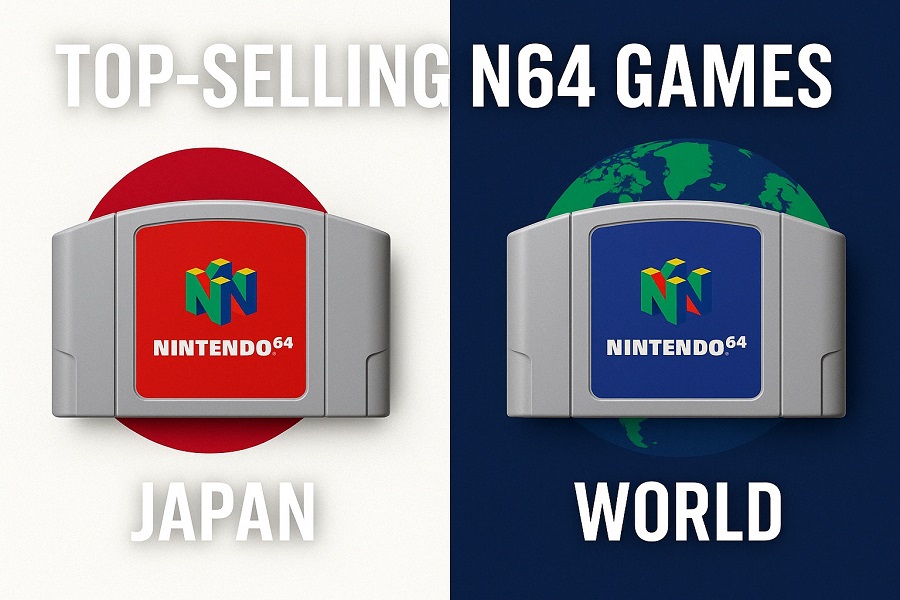
But sales data tells an intriguing story: Japanese and global audiences had very different favorites. This article compares the top-selling N64 games in Japan and around the world, revealing the cultural forces behind each region’s preferences.
🌍 Global Top 10 Best-Selling N64 Games
Rank
Title
Estimated Sales
1
Super Mario 64
~11.91 million
2
Mario Kart 64
~9.87 million
3
GoldenEye 007
~8.09 million
4
The Legend of Zelda: Ocarina of Time
~7.60 million
5
Super Smash Bros.
~5.55 million
6
Pokémon Stadium
~5.46 million
7
Donkey Kong 64
~5.27 million
8
Diddy Kong Racing
~4.88 million
9
Star Fox 64
~4.00 million
10
Banjo-Kazooie
~3.65 million
Japan’s Top 10 Best-Selling N64 Games
Rank
Title (English)
Title (Japanese)
Estimated Sales
1
Mario Kart 64
マリオカート64
~2.22 million
2
Super Smash Bros.
大乱闘スマッシュブラザーズ
~1.97 million
3
Super Mario 64
スーパーマリオ64
~1.92 million
4
Zelda: Ocarina of Time
ゼルダの伝説 時のオカリナ
~1.46 million
5
Pokémon Stadium
ポケモンスタジアム(初代)
~1.37 million
6
Pokémon Stadium 2
ポケモンスタジアム 金・銀
~1.14 million
7
Donkey Kong 64
ドンキーコング64
~1.10million
7
Mario Tennis
マリオテニス64
~1.10million
9
Mario Party 2
マリオパーティ2
~1.07million
9
Kirby 64: The Crystal Shards
星のカービィ64
~1.07million
🔍 Key Cultural Differences in Game Sales
🎯 GoldenEye 007: A Western Hit, But Not in Japan
While GoldenEye 007 was a groundbreaking FPS in the West, Japan never embraced it. Why?
FPS games weren’t widely popular in Japan in the late '90s.
James Bond wasn’t a major pop culture icon there.
Japanese players preferred more colorful and character-based games.
🧢 Mario Games Ruled in Both Regions—but Differently
Super Mario 64 was globally the best-seller.
In Japan, Mario Kart 64 beat it out—perhaps due to its strong local multiplayer appeal.
⚡ Pokémon’s Unique Strength in Japan
Pokémon Stadium and Pokémon Stadium 2 were massive hits in Japan.
Their close integration with the Game Boy games and anime made them cultural events.
🧠 Game Spotlights
⭐ Super Mario 64
3D platforming pioneer.
Packed with charm, depth, and replayability.
Universally beloved across all regions.
⭐ GoldenEye 007
Major hit in North America and Europe.
Pushed console FPS into the mainstream.
Minimal impact in Japan due to genre and cultural mismatch.
⭐ Pokémon Stadium
Hugely popular in Japan.
Transfer Pak feature allowed real Pokémon battles from Game Boy saves.
Less cultural pull in the West compared to core RPGs.
📌 Cultural Preference Breakdown
Feature
Japan
Global Markets
Genre Preference
Multiplayer, family games
Action, shooters, platformers
IP Familiarity
Pokémon, Mario, Kirby
Mario, Zelda, James Bond (GoldenEye)
Play Style
Local co-op
Competitive & cinematic experiences
❓ Frequently Asked Questions
Q: Why didn’t GoldenEye 007 sell in Japan? A: FPS games had niche appeal in Japan at the time, and Bond wasn’t a major cultural figure there. Q: Was Pokémon more successful in Japan? A: Yes. Pokémon spin-offs like Stadium saw strong sales thanks to a massive cross-media presence. Q: What explains the difference in rankings? A: Cultural preferences, genre popularity, and media exposure all played roles.
🧩 Final Thoughts
The Nintendo 64’s game library united gamers worldwide—but also revealed the deep cultural differences that shape our play. From GoldenEye showdowns in the West to Pokémon Stadium battles in Japan, this console was more than just hardware—it was a cultural mirror.
Whether you're a nostalgic fan or a gaming historian, these rankings tell us a lot about what different players value—and why it still matters today.