Why These Famicom Games Sold Millions: The Stories Behind Japan's Best-Selling Classics
Discover why Japan's top-selling Famicom games sold millions. From Mario to Dragon Quest, explore the cultural moments and game design breakthroughs that made history.
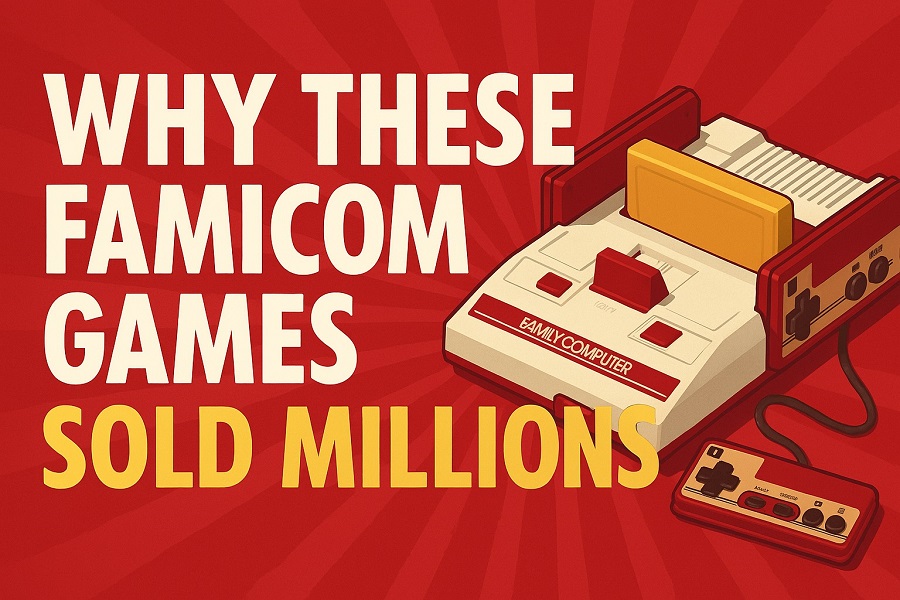
The Famicom (Family Computer), known as the NES in the West, sparked a video game revolution in Japan. But why did certain games rise to the top and sell millions of copies, while others faded into obscurity? In this article, we're not just listing the top-selling Famicom games of all time — we're uncovering the reasons why they sold so well.
Top 5 Best-Selling Famicom Games (With Context & Analysis)
1. Super Mario Bros. (1985) – 6.81 million copies
Why It Sold:
Bundled with the Famicom console in later years, giving it a massive install base.
Innovative side-scrolling platforming that was revolutionary at the time.
Simple controls made it accessible to kids and adults alike.
Iconic music and characters helped it transcend gaming.
Super Mario Bros. wasn’t just a game—it was a phenomenon. It defined the Famicom era and still stands as one of the most influential games ever made.
2. Super Mario Bros. 3 (1988) – 3.84 million copies
Why It Sold:
Massive pre-release hype through magazines and commercials.
Introduced new gameplay mechanics like the overworld map and suit-based power-ups.
Hugely anticipated sequel to an already beloved franchise.
SMB3 was a technical marvel for its time, pushing the Famicom to its limits and setting the standard for platformers.
3. Dragon Quest III (1988) – 3.80 million copies
Why It Sold:
Culmination of the already beloved Dragon Quest saga.
Deep gameplay with party customization, day/night cycles, and a vast world.
Release day chaos: stores opened early, students skipped school, and it made national news.
Dragon Quest III was more than a game; it was a social event in Japan.
4. Dragon Quest IV (1990) – 3.10 million copies
Why It Sold:
Innovative chapter-based storytelling.
Built on the success of DQ3 with better AI and a deeper narrative.
Strong brand loyalty and continued Enix marketing campaigns.
It took the RPG experience to a new level with character-driven storytelling that felt like a playable anime.
5. Golf (1984) – 2.46 million copies
Why It Sold:
One of the earliest accessible sports games on Famicom.
Simple, addictive gameplay that appealed to all ages.
Limited competition during its release window.
Golf proved that video games weren't just for kids — even dads and grandparents got hooked.
Quick Look: Famicom Best-Sellers Ranked #6–10
6. Dragon Quest II (1987) – 2.41 million copies
Expanded the DQ universe with new characters and more complex battles.
7. Baseball (1983) – 2.35 million copies
A simple but competitive multiplayer experience that made it a household favorite.
8. Mahjong (1983) – 2.13 million copies
Tapped into Japan’s love of traditional games in a modern digital format.
9. Pro Yakyuu Family Stadium (1986) – 2.05 million copies
More detailed and arcade-like than Baseball, it offered a leap in sports game realism.
10. Tetris (1988) – 1.81 million copies
The addictively simple puzzle game found its way into countless Famicom homes, even before the Game Boy made it a global hit.
Final Thoughts: Why These Games Dominated
What do these games have in common? Accessibility, timing, and innovation. Whether it was Mario's tight controls, Dragon Quest's immersive storytelling, or Golf's mass appeal, each game resonated with Japan's gaming culture of the time. Combined with smart marketing and often limited competition, these titles became legendary.
The Famicom wasn't just a console—it was a cultural touchstone. And these games? They're its greatest hits.
Want more retro game insights? Subscribe to our newsletter and never miss a nostalgic deep dive!