Why These Super Famicom Games Sold Millions: The Legends Behind Japan's Best-Selling SNES Titles
Explore the reasons why Japan's top-selling Super Famicom games became timeless hits. From RPG epics to platformer masterpieces, we break down the stories behind the numbers.
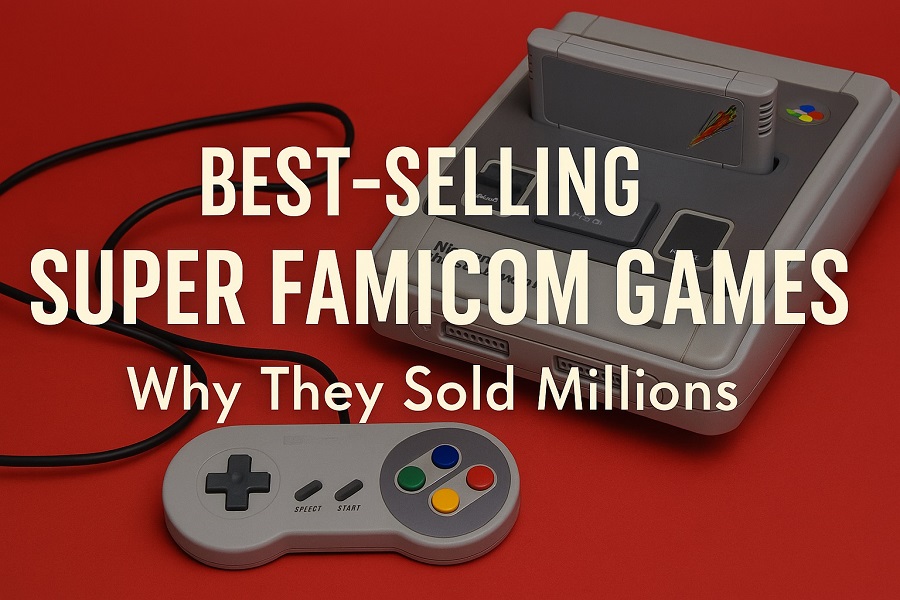
In the golden age of 16-bit gaming, the Super Famicom (known internationally as the Super Nintendo Entertainment System or SNES) reigned supreme in Japan. While many fans remember the classics fondly, few know why certain titles went on to sell millions. Was it gameplay? Storytelling? Timing? Let's break down the top sellers—and what made them so successful.
Top 5 Best-Selling Super Famicom Games in Japan (With Analysis)
1. Super Mario Kart (1992) – 3.82 million copies
Why It Sold:
A groundbreaking concept: fun, competitive racing with iconic Nintendo characters.
Couch multiplayer made it a hit among families and friends.
Addictive track design and easy-to-learn mechanics.
Super Mario Kart essentially invented a new genre. It was more than just a racer—it was the party game of the early '90s.
2. Super Mario World (1990) – 3.55 million copies
Why It Sold:
Launch title that showcased the Super Famicom's graphical power.
Introduced Yoshi, adding new gameplay mechanics.
Expansive worlds, secrets, and refined platforming made it an instant classic.
This game wasn't just a sequel to Mario 3. It was a system seller.
3. Dragon Quest VI: Realms of Revelation (1995) – 3.20 million copies
Why It Sold:
The conclusion to the Zenithia trilogy, highly anticipated.
Improved visuals, monster recruiting, and multi-world storytelling.
Released during the height of the Dragon Quest boom in Japan.
Even in the PlayStation era, fans returned to the Super Famicom for this beloved RPG.
4. Street Fighter II (1992) – 2.90 million copies
Why It Sold:
Arcade-perfect experience at home.
Massive global and local hype around the fighting game genre.
Competitive gameplay fueled endless rematches.
It made the Super Famicom a must-have console for fighting game fans.
5. Donkey Kong Country (1994) – 2.90 million copies
Why It Sold:
Pre-rendered graphics that looked ahead of their time.
Backed by a massive marketing campaign by Nintendo.
Tight gameplay and memorable soundtrack.
This was the moment the West's Rare Studios stunned Japanese gamers.
Quick Look: Super Famicom Best-Sellers Ranked #6–10
6. Final Fantasy VI (1994) – 2.55 million copies
Critically acclaimed RPG with a huge cast and deep story.
7. Super Donkey Kong 2: Diddy's Kong Quest (1995) – 2.21 million copies
Built on DKC’s success with even more polish and level design brilliance.
8. Dragon Ball Z: Super Butouden (1993) – 2.00 million copies
Riding the DBZ anime boom, it became a must-own for fans.
9. Super Mario Collection (1993) – 1.93 million copies
Remastered compilation of Mario classics in one cartridge.
10. Final Fantasy V (1992) – 1.87 million copies
Job system mechanics drew hardcore RPG fans to this entry.
Final Thoughts: The Formula Behind Super Famicom Success
So what drove these titles to the top? It was a combination of:
Gameplay innovation (Mario Kart, Donkey Kong Country)
Franchise loyalty (Dragon Quest, Final Fantasy)
Cultural timing (Street Fighter II, DBZ)
While Western audiences often remember the SNES for Zelda and Chrono Trigger, Japan's top sellers reveal a different, fascinating story about what defined a generation.
Looking for more deep dives into Japanese gaming history? Subscribe for the latest retro insights!