The Mega Drive (aka the Sega Genesis) had a fascinating life — and it lived very differently depending on where in the world you were. In the West, it was Sega’s crowning console achievement. In Japan? Not quite. And that’s where things get interesting.
Let’s dive into how the top-selling games on the Mega Drive differed between Japan and the rest of the world — and what that says about gaming culture across regions.
🌍 Global Best-Sellers: Sonic Reigns Supreme
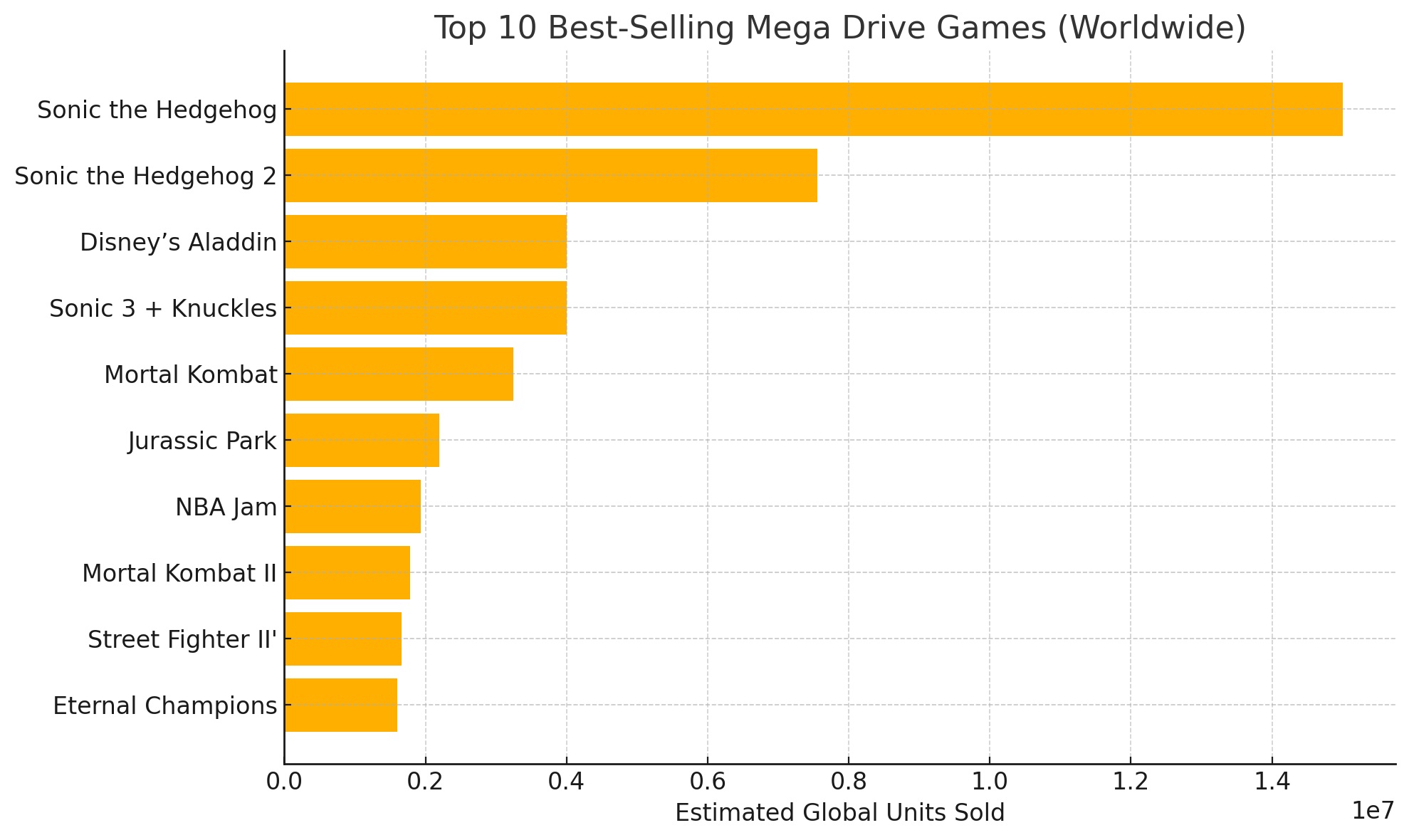
When most people think of the Mega Drive, they think Sonic the Hedgehog. And rightly so — it was not just a mascot, but a movement. Globally, Sonic the Hedgehog (1991) shipped over 15 million units, thanks in part to being bundled with the console. Here are the top global sellers:
Rank
Game
Estimated Sales
1
Sonic the Hedgehog
15 million+ (with bundle)
2
Sonic the Hedgehog 2
~7.5 million
3
Disney’s Aladdin
~4 million
4
Sonic 3 + Sonic & Knuckles
~4 million combined
5
Mortal Kombat
~3.25 million
6
Jurassic Park
~2.2 million
7
NBA Jam
~1.93 million
8
Mortal Kombat II
~1.78 million
9
Street Fighter II\' Special Champion Edition
~1.67 million
10
Eternal Champions
~1.6 million
Fast, flashy, and edgy — these games hit the sweet spot for action-hungry gamers in the West.
🗾 Japan’s Best-Sellers: Puzzle and Strategy Rule
Surprisingly, Sonic wasn’t nearly as dominant in Japan. Instead, Japanese players flocked to puzzle games and tactical RPGs. The #1 best-seller in Japan? Not a blue blur — but a bunch of falling blobs. Here are Japan’s top-selling Mega Drive games:
Rank
Game
Sales in Japan
1
Puyo Puyo
~520,000
2
Shining Force
~243,000
3
Sonic the Hedgehog
~230,000
4
Shining Force II
~218,000
5
Phantasy Star IV
~217,000
6
Virtua Racing
~192,000
7
Street Fighter II\' Plus
~190,000
8
Sonic the Hedgehog 2
~185,000
9
Sonic the Hedgehog 3
~174,000
10
Shining and the Darkness
~162,000
Titles like Shining Force and Phantasy Star showed Japan’s strong love for deep, story-driven strategy and RPG gameplay — a stark contrast to the action-heavy top titles abroad.
🔍 Why the Difference?
So what explains this dramatic contrast?
Console popularity: In Japan, the Super Famicom massively outsold the Mega Drive, making Sega’s install base smaller. So the games that did break through had to really resonate.
Genre preferences: Japanese gamers leaned more toward turn-based RPGs, strategy, and puzzles — less so fast-paced action or gore-heavy fighters.
Cultural aesthetics: The cute, quirky design of Puyo Puyo or the anime-style storytelling in Shining Force fit Japanese tastes better than Westernized edginess.
🧭 Where Are They Now?
Interestingly, some of Japan’s Mega Drive favorites have endured:
Puyo Puyo lives on as a staple puzzle franchise (and even crossed over with Tetris!)
Shining Force remains beloved among retro RPG fans
Phantasy Star evolved into Phantasy Star Online, still active today
Meanwhile, Sonic bounced between highs and lows — but remains Sega’s global icon.
🧠 Final Thoughts
The Mega Drive may not have dominated Japan like it did the West, but its best-sellers paint a vivid picture of how game preferences diverged across the globe. Where Western gamers saw a speed race, Japan saw a tactical battlefield (and a falling blob or two).
That’s the magic of retro gaming — same hardware, totally different legacies.