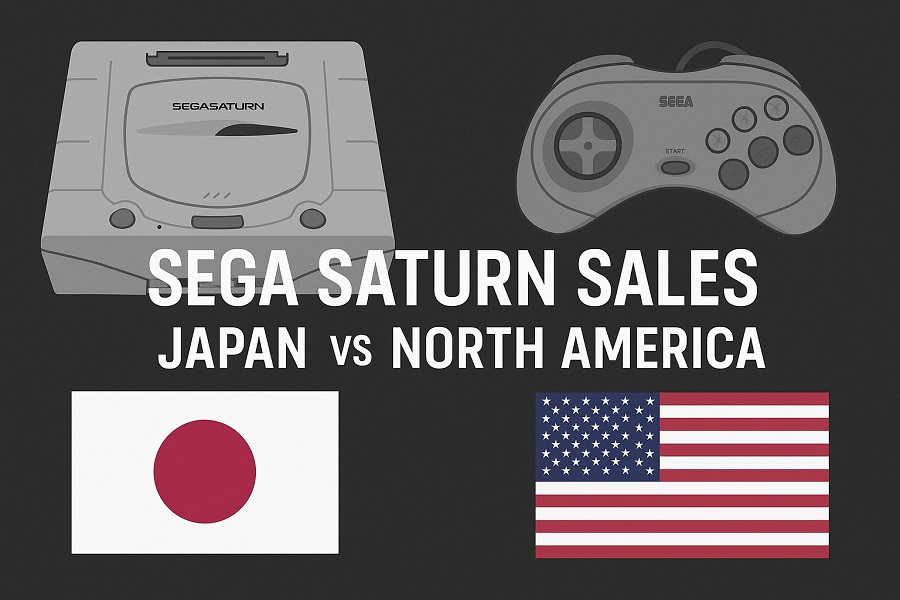
Sega Saturn Sales Showdown: Japan vs. North America’s Top-Selling Games
Explore Sega Saturn sales across Japan and North America. Discover how regional tastes and business choices shaped two completely different top game charts.
The Sega Saturn was a console caught between worlds. Launched in 1994 in Japan and 1995 in North America, it promised 32-bit power and arcade-quality graphics. But while the hardware was the same, the experiences for gamers in Japan and North America were vastly different. A key reason? The top-selling games in each region were practically from different universes.
Top 10 Best-Selling Sega Saturn Games in Japan
Virtua Fighter 2 – 1,049,968 copies
Sega Rally Championship – 598,368 copies
Fighters Megamix – 528,698 copies
Super Robot Wars F Final – 513,782 copies
Sakura Wars 2: Thou Shalt Not Die – 509,091 copies
Super Robot Wars F – 464,169 copies
NiGHTS into Dreams – 392,383 copies
Evangelion: 2nd Impression – 387,002 copies
Tokimeki Memorial – 374,936 copies
Fighting Vipers – 364,798 copies
These games reflect Japan’s love for mecha strategy (Super Robot Wars), visual novels and anime-based titles (Evangelion, Tokimeki Memorial), and Sega's own arcade hits.
Top 10 Best-Selling Sega Saturn Games in North America (by revenue/popularity)
Madden NFL 97
NiGHTS into Dreams
Virtua Fighter 2
Daytona USA
Virtua Cop
Tomb Raider
Sega Rally Championship
Sonic 3D Blast
World Series Baseball
Panzer Dragoon
North American sales leaned heavily toward sports titles, action games, and Western-developed hits like Tomb Raider. RPGs and anime-related titles were virtually absent.
Key Differences Between the Two Markets
Genre Preferences: Japan favored RPGs, dating sims, and anime-based games. North America leaned into sports, racing, and 3D action games.
Cultural Appeal: Games like Tokimeki Memorial or Sakura Wars didn't resonate in the West due to different social norms and storytelling styles.
Localization Barriers: Text-heavy games required heavy localization, often not just translation but cultural adaptation, which was expensive and slow.
Marketing Strategy: Sega of America focused more on competing with Sony and Nintendo using sports and action titles, while Sega of Japan embraced a broader range.
Why the Gap? Much of the divide stems from internal disagreements between Sega of Japan and Sega of America. The latter hesitated to bring over niche or anime-heavy titles, fearing they wouldn't sell. Combine that with high localization costs and an already struggling presence in the North American market, and many Japanese hits never made it across the ocean.
Hidden Gems and Lost Opportunities Several critically acclaimed Japanese Saturn titles never saw a Western release. "Policenauts," Hideo Kojima's cinematic sci-fi adventure, was a technical marvel but remained Japan-only. Likewise, "Princess Crown," a gorgeous 2D action-RPG that later inspired the "Odin Sphere" series, was never localized. These games might have helped the Saturn stand out in North America if they had received proper translation and marketing.
On the flip side, some Western games never made it to Japan, or were received with far less enthusiasm. Titles like "Madden NFL" had limited appeal in Japan, where American football isn't widely followed.
What If They Crossed Over? Had more Japanese games been localized, they might have carved out niche fanbases similar to what we see with modern cult hits. Games like "Sakura Wars" could have resonated with Western RPG and anime fans if they had been introduced gradually with proper support. Today, franchises like "Persona" and "Yakuza" have proven that Western gamers are open to deep, story-driven Japanese titles when marketed right.
Legacy and Retro Appeal In recent years, the Saturn has found a second life through emulation, fan translations, and retro game collecting. The Japanese Saturn library, in particular, is a treasure trove for gamers interested in genres that were underrepresented in the West during the 1990s. From 2D fighters to visual novels, exploring the full global library offers a much broader appreciation for what the Saturn achieved.
Conclusion The Sega Saturn's dual identity is a fascinating snapshot of how culture shapes gaming. In Japan, it became a haven for anime fans and strategy lovers; in North America, it tried to be a contender in the sports and action market. For retro gamers today, exploring both libraries offers a richer appreciation of what the Saturn could have been—and what it truly was.
The differences in the Saturn's top games are more than just statistics. They tell a story of divergent tastes, corporate decisions, and missed chances—a story that still echoes in how games are marketed and localized today.