Top 10 Best-Selling Nintendo Wii Games: Japan vs Global Market Comparison
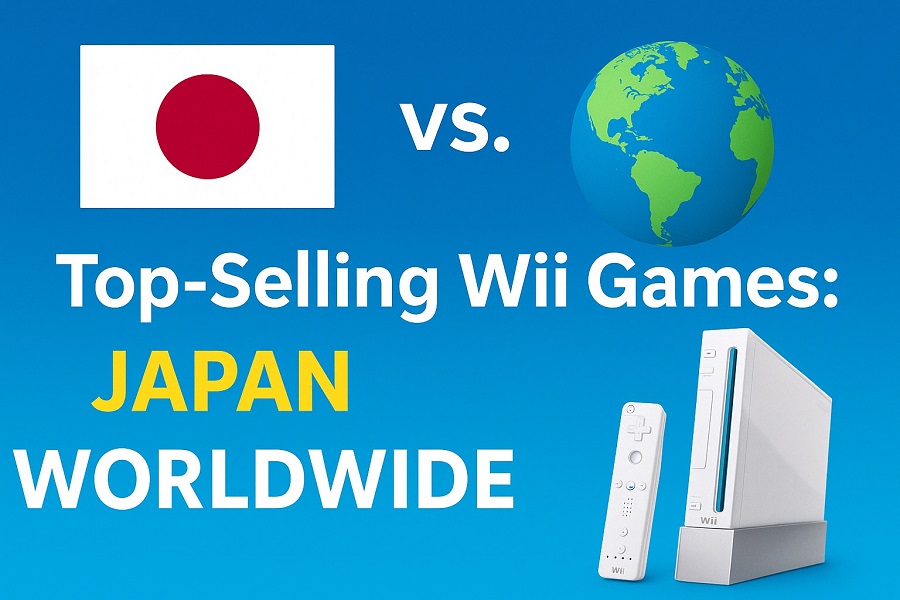
Compare the top-selling Nintendo Wii games in Japan vs globally. Includes sales charts, cultural insights, and why titles like Wii Sports and Mario Kart dominated.
The Nintendo Wii was a revolutionary console that changed how people interacted with video games. With its motion-sensing controllers and family-friendly library, the Wii became one of the best-selling consoles of all time. But interestingly, the most popular Wii titles varied significantly between Japan and the rest of the world.
In this article, we’ll explore and compare the top 10 best-selling Wii games in Japan and globally to highlight regional preferences and gaming trends.
🎌 Top 10 Best-Selling Wii Games in Japan
RankTitleRelease DateUnits Sold (Japan) 1New Super Mario Bros. WiiDec 2009~4.56 million 2Wii SportsDec 2006~3.72 million 3Mario Kart WiiApr 2008~3.70 million 4Wii FitDec 2007~3.56 million 5Wii Sports ResortJun 2009~3.14 million 6Wii Play (Hajimete no Wii)Dec 2006~2.80 million 7Wii Fit PlusOct 2009~2.40 million 8Wii PartyJul 2010~2.38 million 9Super Smash Bros. BrawlJan 2008~2.30 million 10Mario Party 8Jul 2007~1.47 million
🌍 Top 10 Best-Selling Wii Games Worldwide
RankTitleRelease DateUnits Sold (Global) 1Wii SportsNov 2006~82.9 million 2Mario Kart WiiApr 2008~37.4 million 3Wii Sports ResortJun 2009~33.1 million 4New Super Mario Bros. WiiNov 2009~30.3 million 5Wii PlayDec 2006~28.0 million 6Wii FitDec 2007~22.7 million 7Wii Fit PlusOct 2009~21.1 million 8Super Smash Bros. BrawlJan 2008~13.3 million 9Super Mario GalaxyNov 2007~12.8 million 10Just Dance 3Oct 2011~9.9 million
📈 Sales Trends Over Time
Here’s a simple timeline of major Wii game releases and their peak sales years:
2006: Wii Sports, Wii Play launch with console → Instant success
2007: Wii Fit, Super Mario Galaxy push sales momentum
2008: Mario Kart Wii and Super Smash Bros. Brawl dominate charts
2009: Wii Sports Resort, New Super Mario Bros. Wii inject new life
2010–2012: Gradual decline as Wii U approaches launch
🎯 Peak years for Wii game sales were 2007–2009, riding the massive casual gaming boom.
🌍 Regional Differences in Game Popularity
United States:
Wii Sports (bundled) was omnipresent
Just Dance series exploded in popularity (not in Japan)
Europe:
Strong sales for Wii Fit and Wii Sports Resort
Mario Kart Wii maintained a massive player base longer than in Japan
Japan:
Local multiplayer games (Wii Party, Mario Party 8) thrived
Strong preference for Nintendo-developed titles
🌸 Cultural Factors Behind the Differences
Family-Oriented Gaming Culture in Japan: Games that entire families could enjoy together, like Wii Party, were more appealing.
Fitness Trend in the West: Wii Fit became a fitness craze especially in the U.S. and Europe, leading to higher adoption outside Japan.
Music and Dance Preferences: Titles like Just Dance performed much better in the West due to stronger music game culture.
Bundling Strategies: In Japan, Wii Sports was not bundled with every Wii console, impacting its sales compared to other regions.
❓ FAQ: Wii Sales Comparison
Q: Why did Wii Sports sell so much more globally than in Japan? A: It was bundled with most Wii consoles outside Japan, meaning almost every console sale counted as a game sale.
Q: Was New Super Mario Bros. Wii a bigger success in Japan or worldwide? A: Both. It was the highest-selling standalone Wii game in Japan and remained among the top worldwide.
Q: Why didn't Just Dance succeed in Japan? A: Japanese gamers favored locally themed party games and rhythm games like Taiko no Tatsujin, with different musical tastes.
Q: How long did the Wii remain popular? A: The Wii’s prime lasted from 2006 to about 2011, after which attention shifted to Wii U and later, Nintendo Switch.
🏁 Conclusion
While Nintendo’s IPs dominate both the Japanese and global Wii sales charts, the reasons for success differ greatly between markets. Understanding these regional preferences offers deep insights into how culture shapes the gaming world.
Whether you’re revisiting the Wii classics or just curious about gaming history, the Wii era was truly a unique chapter that united generations through gaming.