Discover how Japan's population density compares globally and explore the most and least densely populated prefectures, from Tokyo to Hokkaido.

 Japan Rankings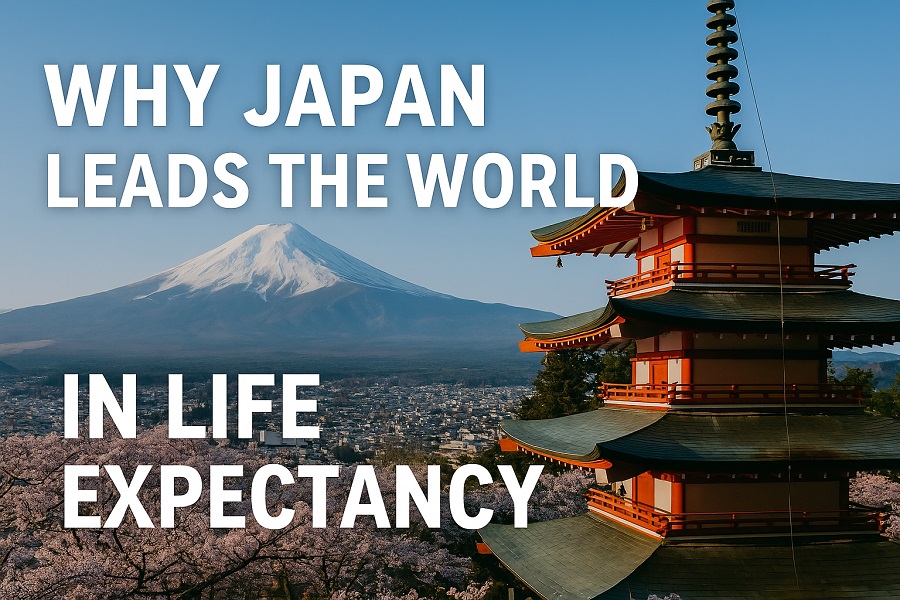
Japan has long been recognized as a global leader in life expectancy. With an average life span of approximately 84.8 years, the country consistently ranks among the top nations worldwide, second only to places like Hong Kong. But what makes Japan so unique in terms of longevity—and why do some Japanese prefectures live even longer than others?
In this article, we explore the reasons behind Japan’s long life expectancy and highlight the top five prefectures where people live the longest, revealing what we can learn from them.
| Rank | Prefecture | Average Life Expectancy |
|---|---|---|
| 1 | Shiga | 85.71 years |
| 2 | Kyoto | 85.54 years |
| 3 | Nagano | 85.51 years |
| 4 | Nara | 85.45 years |
| 5 | Okayama | 85.39 years |
Let’s look at some shared characteristics that contribute to their exceptional longevity:
These prefectures emphasize traditional Japanese cuisine (washoku), which includes:
In Nagano, for example, a national campaign in the 1980s drastically reduced salt consumption, cutting rates of stroke and heart disease dramatically.
In rural and semi-urban prefectures like Shiga and Nara:
This regular movement keeps older adults physically and mentally fit without the need for intense exercise regimens.
Social isolation is a known health risk. In long-living prefectures:
Such social inclusion has been linked to reduced rates of depression and dementia.
Japan’s universal healthcare system ensures that:
Prefectures like Kyoto and Okayama benefit from high-quality regional hospitals and proactive local health policies.
In regions like Nagano and Shiga, local governments actively promote:
These initiatives have led to sustained improvements over decades.
Japan’s success isn’t simply genetic—it's cultural, environmental, and policy-driven. Other nations can adopt similar strategies by:
Japan’s impressive life expectancy isn’t just a national statistic—it’s a result of intentional lifestyle choices, community values, and public health efforts. The top-ranking prefectures—Shiga, Kyoto, Nagano, Nara, and Okayama—offer living proof that healthy, engaged, and well-supported communities can thrive for decades longer.
If you’re looking to live longer and better, Japan might just be the perfect teacher.
For more insights on global health trends and regional longevity secrets, follow our blog or subscribe for updates.