Not Just Sushi: The Fascinating Foreign Roots of Japanese Foods and Sweets
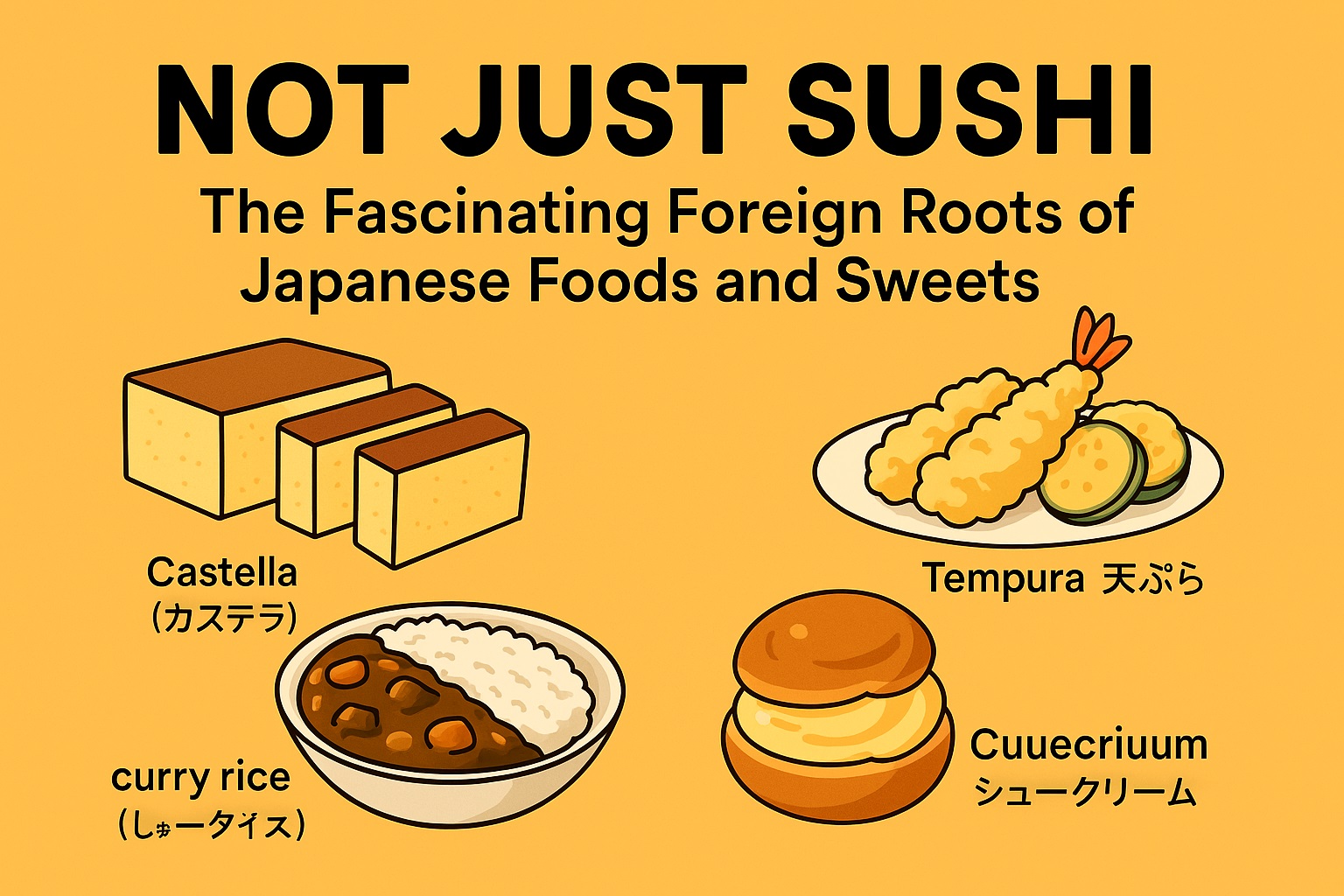
Discover how popular Japanese foods like Castella (カステラ), curry rice (カレーライス), and cream puffs (シュークリーム) evolved from foreign origins into uniquely Japanese favorites. A delicious journey through food, culture, and history.
When people think of Japanese cuisine, sushi, ramen, and tempura might be the first dishes that come to mind. But did you know that many popular Japanese foods and sweets have foreign roots?
Over centuries, Japan has imported culinary ideas from around the world and adapted them into something uniquely Japanese. From Portuguese sponge cake to French cream puffs, these foods have evolved into beloved staples in Japanese homes, bakeries, and convenience stores.
In this article, we'll explore some of these fascinating examples, comparing their original forms with their Japanese versions, and celebrating the creativity and cultural blending that made them what they are today.
1. Castella (カステラ) – From Portugal to Nagasaki Sweetness
Origin: Portugal (16th century) Japanese version: Long, rectangular sponge cake with a moist texture and sugar crystals on the bottom
Brought by Portuguese missionaries in the 1500s, "Pão de Castela" ("bread of Castile") became what is now known in Japan as Castella. While the original may have resembled a basic sponge cake, the Japanese version is much moister, sweeter, and often has a layer of coarse sugar at the bottom for extra texture. It's especially famous in Nagasaki, where it was first introduced and still widely produced today.
Similarities: Base ingredients (eggs, sugar, flour) remain similar. Differences: Texture, sweetness, and presentation have been refined to match Japanese preferences.
2. Tempura (天ぷら) – A Portuguese Idea Turned Artform
Origin: Portugal (16th century) Japanese version: Lightly battered and deep-fried seafood and vegetables
Portuguese missionaries also introduced a frying technique called "peixinhos da horta," which involved battering and frying green beans. The Japanese adapted this method, refined it using lighter batter (cold water + flour), and applied it to seafood and seasonal vegetables. Tempura became a culinary art form in Japan, particularly in Edo (now Tokyo).
Similarities: Deep-frying in batter remains central. Differences: Japanese tempura is lighter, more delicate, and served with dipping sauce or salt.
3. Curry Rice (カレーライス) – British-Indian Origins, Japanese Comfort Food
Origin: India via British Navy (19th century) Japanese version: Thick, mildly spicy curry served with rice and pickles
Originally an Indian dish, curry was introduced to Japan through British naval influences during the Meiji era. The Japanese version features a thickened, stew-like curry roux made with flour and oil, and is much milder in flavor. It's commonly eaten with white rice and pickled vegetables (fukujinzuke).
Similarities: Spice-based sauce served with rice. Differences: Milder flavor, thick texture, and incorporation of ingredients like carrots, potatoes, and pork or beef.
4. Cream Puff (シュークリーム) – French Choux with a Japanese Twist
Origin: France (choux pastry) Japanese version: Filled with custard cream, sometimes whipped cream, and sold in bakeries and convenience stores
The French choux à la crème has become a Japanese classic known as "shūkurīmu." Japanese cream puffs tend to have thinner, softer shells and are filled generously with custard or whipped cream. They're not just bakery items—they're also found in supermarkets and convenience stores.
Similarities: Choux pastry concept and cream filling. Differences: Lighter filling, softer shell, and mass-market availability in Japan.
5. Shortcake (ショートケーキ) – A Very Japanese Strawberry Delight
Origin: Western shortcake (various European traditions) Japanese version: Soft sponge cake with fresh whipped cream and strawberries
Western shortcakes often use dense biscuits or sponge and are very sweet. In Japan, the shortcake evolved into a light, fluffy sponge cake layered with whipped cream and fresh strawberries. It is the quintessential Japanese birthday and celebration cake.
Similarities: Cake with cream and fruit. Differences: Much lighter in texture and sweetness, with an emphasis on freshness.
6. Pudding (プリン) – Custard with a Japanese Character
Origin: England (custard pudding) Japanese version: Flan-like dessert with a firmer texture and caramel sauce
"Purin" in Japan refers to a firm yet creamy custard pudding topped with a caramel sauce, often sold in cups at convenience stores. While the British custard pudding is softer and typically served warm, Japanese purin is chilled and eaten as a refreshing dessert.
Similarities: Egg-based custard and caramel topping. Differences: Texture and serving style; Japanese version is often firmer and eaten cold.
7. Korokke (コロッケ) – From French Croquettes to Everyday Bento Item
Origin: France (croquette) Japanese version: Mashed potato cakes breaded and deep-fried
French croquettes often contain béchamel or ground meat, but in Japan, the korokke has evolved into a mashed potato patty coated in panko breadcrumbs and deep-fried until crispy. You’ll find them in bento boxes, supermarkets, and even specialty korokke shops.
Similarities: Breaded, fried exterior. Differences: Main filling is potato rather than cream or meat; often served with tonkatsu sauce.
Why Does Japan Adapt So Well?
Japan’s ability to adopt and adapt foreign foods comes from a mix of curiosity, creativity, and an appreciation for harmony. Instead of simply copying foreign dishes, Japanese chefs and home cooks often refine them—adjusting flavors, presentation, and even cooking methods to suit local preferences. The result? Dishes that feel both exotic and deeply familiar.
Final Thoughts
From tempura to pudding, Japan’s take on foreign foods is more than just imitation—it’s reinvention. These dishes retain echoes of their origins while showcasing Japanese precision, aesthetics, and love for seasonal ingredients. Whether you're a food lover, a cultural explorer, or just curious about how sushi isn't the only story, these foods offer a delicious glimpse into how Japan has made the world’s cuisine its own.
Next time you bite into a korokke or enjoy a slice of Castella, remember: it’s a taste of global history, lovingly transformed in the Japanese kitchen.
Hungry for more? Stay tuned for our upcoming deep dives into individual dishes, recipe recreations, and where to try them in Japan!